



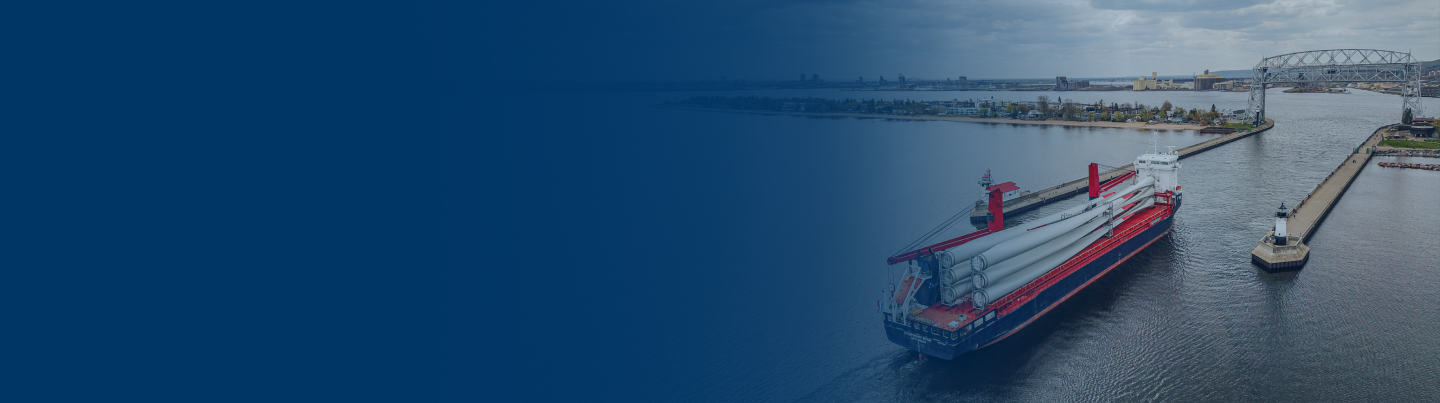

Operating at North America’s furthest-inland seaport, Duluth Cargo Connect is a multimodal logistics hub for domestic and international trade. Our facilities anchor the westernmost tip of Lake Superior, right at the heart of Duluth–Superior’s harbor, where we serve as a can-do partner for shippers moving complex cargo to and from midcontinent North America and global markets.
Who We Are
We are a working partnership of the Duluth Seaway Port Authority and Lake Superior Warehousing, bringing together heavy-lift infrastructure, trusted experience and inland access to support the most demanding cargo moves on the Great Lakes.
What We Do
We specialize in handling breakbulk, project, heavy-lift and containerized cargo, providing tailored logistics solutions and supply chain advantages to customers throughout our region and around the world. Our operations are built on decades of experience—the Clure Public Marine Terminal has been handling the Great Lakes’ heaviest and most complex cargo since 1959, forming the foundation of today’s heavy-lift and project cargo capabilities.
How We Work
We’re known for our can-do approach, personalized service and tailor-made solutions. We work as a true partner, listening first, adapting quickly and building unique solutions around each client’s cargo and objectives. Rather than forcing freight into standardized processes, we tailor every move to our customers’ specific needs and goals.
This client-first mindset, combined with purpose-built infrastructure and decades of experience, has earned industry recognition, including Port/Terminal Operator of the Year honors from Heavy Lift & Project Forwarding International magazine and multiple rankings among the top ports in North America for cargo fluidity and inland clearances.
Geographic Center
Located less than 400 miles645 kilometers from the geographical center of North America, Duluth provides direct inland seaport access to 14 U.S. states and 3 Canadian provinces within a single day’s drive. Through the Great Lakes-St. Lawrence Seaway System, shippers move cargo farther inland by water, reducing overland mileskilometers and extra cargo handoffs, avoiding coastal congestion and creating more efficient, resilient supply chains.