




Frequently Asked Questions
What is the maximum vessel size that can call at Duluth via the Great Lakes–St. Lawrence Seaway System?
Duluth can accommodate Seawaymax vessels, the largest ships able to transit the Great Lakes–St. Lawrence Seaway System. These vessels can be up to approximately 740 feet225.6 meters long and 78 feet23.8 meters wide. The Seaway’s maximum operating draft is 27 feet8.2 meters.
What crane capacity does Duluth Cargo Connect offer?
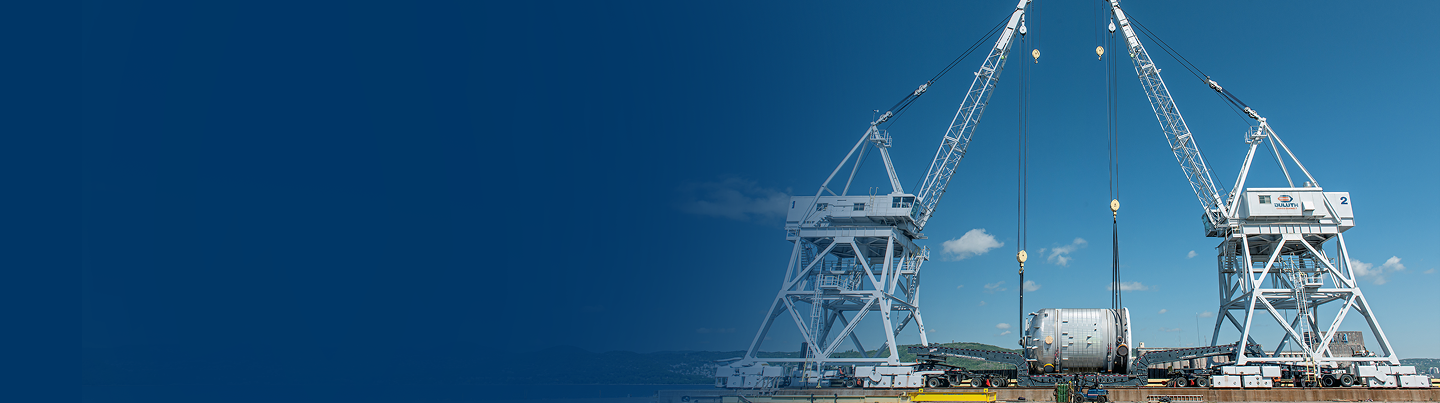
On-site lifting equipment includes twin 90-ton81.6 metric tonne gantry cranes capable of 120 tons109 metric tonnes in tandem lift, as well as a 300-ton272 metric tonne mobile crane. Additional specialized lifting solutions can be arranged to meet specific project requirements.
What is the load capacity of Duluth Cargo Connect’s docks and wharves?
We operate six Seawaymax ship berths engineered for heavy-lift and project cargo. Dock strength is rated at 2,000 pounds per square foot9.8 tonnes per square meter, with on-dock rail capacity of 90 kips per axle40.8 metric tonnes per axle. A dedicated roll-on/roll-off dock further supports oversized and wheeled cargo/rolling stock.
How much secure outdoor storage and laydown area is available?
We offer 40+ acres16.2+ hectares of secure outdoor laydown and staging space, well-suited for oversized, heavy and project cargo requiring flexible storage adjacent to vessel, rail and truck connections.
Can I export cargo from Duluth Cargo Connect?
Yes. Our multimodal logistics hub is purpose-built for both export and import cargo, offering direct access to the Great Lakes–St. Lawrence Seaway System, on-dock rail connections and immediate highway access to the North American hinterland.
We also serve as the terminal for Spliethoff’s regular trans-Atlantic liner service, connecting Duluth with Europe and the Mediterranean. Customers routinely use our facilities to move export cargo to markets around the world.